
Face powder: choosing a finish and applying it without a heavy layer
Monday 19th October 2026
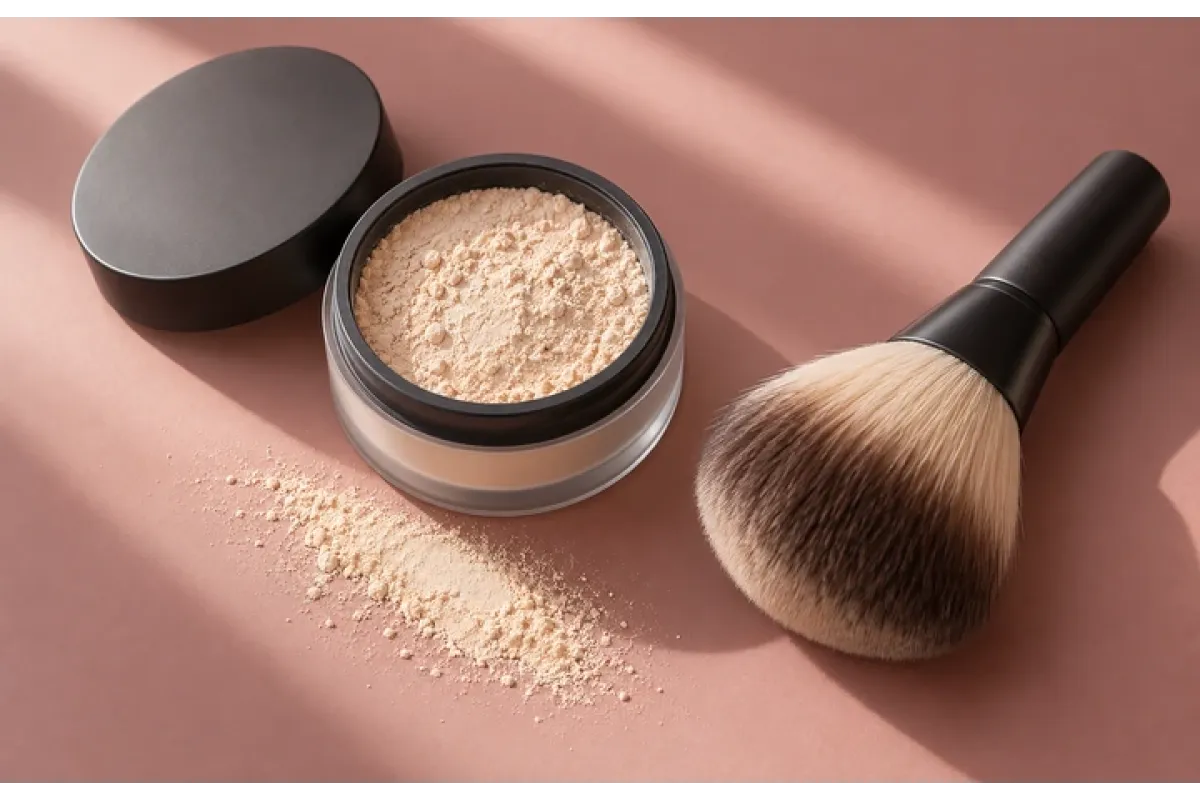
Face powder can bring a makeup look together: reduce shine where it distracts, soften the appearance of the base and create the finish you enjoy. Sometimes, however, lines, dry areas or the foundation layer become more noticeable after powdering. Before changing products, consider three things: the result you want, the amount you pick up and where you apply it.
It is easier to choose powder for a familiar foundation and your usual makeup. Decide what you want to preserve: a glow across the cheeks, a more matte centre or an even appearance in photographs. Preparation matters too. Our guide to moisturiser and primer before makeup helps you consider the earlier steps. Here, we will focus on powder itself, its shade, application and touch-ups during the day.
1. Format, purpose and colour are separate choices
Loose or pressed
These words describe the product's physical format. Loose powder comes in a jar, often with a sifter; pressed powder sits in a compact. Picture where you will use it. Do you have a surface at home where you can measure out a little product, or do you want something easy to retrieve from a bag? Format alone does not establish coverage. Read the individual description and assess the applied result.
Setting or finishing
Setting usually refers to helping set makeup, while finishing refers to the final visual effect. Brands may use overlapping descriptions. Read what the selected powder is intended to do and how its maker recommends applying it. There is no need to buy two jars simply because those words differ. First identify your desired result and what your existing product already achieves.
Translucent or tinted
Translucent describes a transparent or sheer character, but it does not remove the need to check the product on your skin. With tinted powder, both depth and undertone matter. Corrective pink, lavender or other shades have a particular purpose; choosing one because it looks attractive in the jar is not enough. Compare the finished effect over your foundation, rather than just the dry powder on a fingertip.
2. Begin with one task
You do not have to powder every part of the face equally. Look at your makeup in everyday light and decide precisely where a change is wanted. This table helps turn a general wish into a useful shopping question, without expecting one product to provide every possible effect at once.
| What you want to change | What to look for | How to begin |
|---|---|---|
| Shine in the centre of the face | A description of a mattifying finish | A small amount on the areas that need it |
| A foundation layer that moves | A stated makeup-setting purpose | Careful application over the completed base |
| A softer final appearance | The finish description and your own trial | A thin layer, followed by a check |
| Noticeable dry patches | The comfort of existing skincare and foundation | Assess earlier layers before automatically adding powder |
Powder does not have to remove all natural luminosity. Adjusting a small area beside the nose while leaving the cheeks without another layer may be enough. This also makes comparison easier: you can see what a specific amount has changed and stop when the finish suits you.
3. Check the shade with your foundation
Where possible, assess powder over the base you intend to wear with it. Look at the face and jawline in daylight and your usual indoor lighting. Consider the overall result: has it become noticeably lighter, warmer or heavier? An on-screen photograph and a shade name can narrow a search, but they cannot replace checking the combination.
For a first trial, apply a little product to one side of the face and compare it with the other. Avoid aiming for maximum mattness immediately. If you are preparing for an event with photography, try the makeup beforehand and take a picture in similar light. This gives you time to judge the combination without making the first assessment just before leaving.
Check the actual option in the order listing as well. The range name, pack weight and shade are separate details. A corrective colour shown on the brand's website does not establish that this is the option in your selected shop listing. Clarify the version before purchasing if it is unclear.
4. Two examples from the Wellness Expert catalogue
Make Up For Ever HD Skin Setting Powder, 18 g. The shop describes a loose powder with a soft matte finish and suggests a brush for lighter coverage. The brand's directions include puff application and a brush option. This example lets you consider dispensing and tool choice; confirm the particular shade separately.
Make Up For Ever Ultra HD Loose Translucent Powder, 8.5 g. According to the shop description, this is a translucent loose powder with a natural matte finish for the final stage of makeup. Start with a small amount and see whether you like it over your regular foundation. The word translucent does not make checking colour and quantity unnecessary.
These examples help compare purpose and use. Their names and pack sizes differ; do not automatically transfer one range's properties to the other. Check the current ingredients, version and directions before ordering. Comparing grams alone tells you little about whether you will enjoy the finish or find the product convenient.
5. Apply in small amounts
- Assess the completed base. Let preceding layers settle according to their directions. If moisturiser or foundation already forms streaks, address that area first.
- Measure out a little. Use the supplied sifter or dispenser. Distribute the amount across a clean tool so it does not land as one concentrated patch.
- Work on the chosen area. Use gentle movements without vigorous rubbing. Choose pressing or light distribution according to the powder's directions and your tool.
- Check and stop. Look from an ordinary viewing distance. Add another small amount only where it is needed.
There is no single universal quantity for every face, brush and formula. For a result you can repeat, remember your own sequence: how much you picked up, which part of the tool you used and which areas you left without powder. That makes a successful application easier to understand and reproduce.
6. What can make a light finish harder to achieve
- The same layer everywhere. The nose, cheeks and under-eye area may look different. Begin where needed, then assess neighbouring areas.
- Going straight from jar to face. An uneven load is harder to distribute. First make sure the amount on your tool is manageable.
- Adding layers without checking. Before a touch-up, identify where the makeup has changed. Excess shine can first be gently blotted with a clean tissue.
You do not have to repeat the entire morning application during the day. Assess a small area, adjust it if necessary, then decide whether more powder is wanted. Under the eyes, look at the result while smiling as well. The aim is an appearance you enjoy in movement, rather than only in a still, close-up reflection.
7. Clean tools and careful storage
Keep a personal brush or puff for home use and clean it according to its instructions. The American Academy of Dermatology recommends washing makeup brushes every 7–10 days. Allow tools to dry before storage; do not put a damp puff into a closed powder case.
Close the packaging after use, keep the labelling and follow the manufacturer's storage directions. Our guide to cosmetic shelf life and PAO explains the period-after-opening markings. A clean, dry jar and a clear opening date help you organise your makeup bag and check the product's condition when needed.
8. A short checklist before buying
- Purpose: what do you want to change in the finished makeup?
- Finish and shade: have you checked them over your usual base?
- Format: is the packaging convenient to dispense, carry and store?
- Application: do you have a suitable clean tool and a clear method?
Start with a suitable purpose and a small amount. Powder becomes a useful part of makeup when you know where it is wanted, what finish it gives and when to stop adding it.
Mila Serani, Skincare & Beauty Editor at Wellness Expert