
Purple shampoo for blonde and grey hair: reduce yellow without over-toning
Tuesday 03rd November 2026
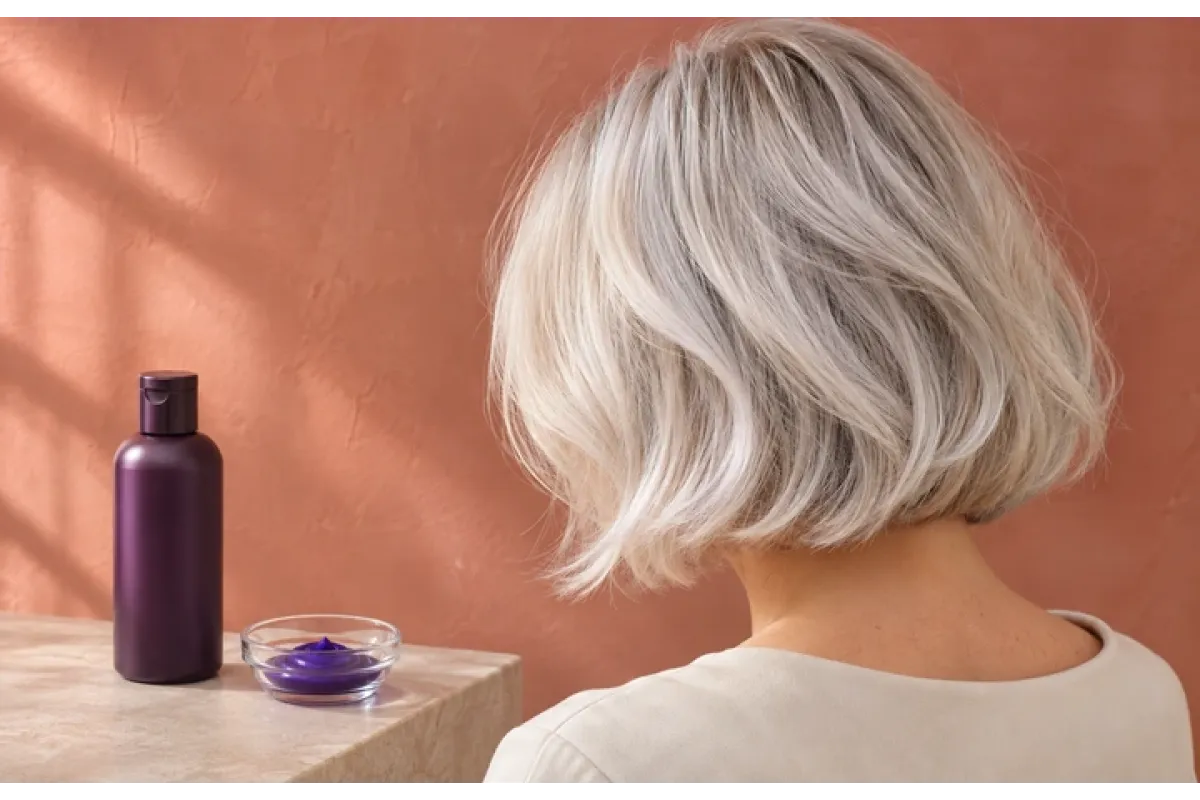
A cool blonde can still feel soft and freshly washed yet look warmer than intended. White and grey hair can also develop an unwanted yellow cast. A purple shampoo may help, but buying the darkest violet formula and leaving it on longer is an unreliable way to choose one. The useful starting point is the colour you see, the result you want and the condition of your lengths.
Think of purple shampoo as an occasional colour adjustment within your washing routine. It can reduce the appearance of yellow tones; it cannot replace every other part of caring for blonde or grey hair. Here is how to choose it and recognise when your hair would benefit more from ordinary conditioning or a conversation with your colourist.
What purple shampoo actually changes
Purple and yellow sit opposite each other on the colour wheel. Depositing violet pigment can therefore make unwanted yellow appear less noticeable. The shampoo cleanses while adding this optical colour correction. “Silver”, “purple” and “anti-yellow” are useful clues on a label, but check the intended hair colours and directions rather than relying on the name alone.
This is pigment deposition, not lightening. Dark roots will not become blonde, and a warm blonde will not automatically become platinum. Dryness, roughness and a yellow cast are also different concerns: a cooler colour does not establish that the hair has become better conditioned. Assess tone and feel separately after washing and drying.
Decide whether yellow is the problem
Look at clean, dry hair in daylight, away from strongly coloured bathroom lighting. Decide which sections look warmer than you want. A soft golden blonde can be intentional; there is no need to remove warmth that you enjoy. With highlights or balayage, compare the lightened pieces with your desired shade rather than expecting the darker base to change.
| What you notice | A useful direction | What to remember |
|---|---|---|
| Yellow in cool blonde or pale highlights | Consider a purple shampoo | Choose a formula intended for those shades |
| Yellowing in white or grey hair | Consider a suitable silver shampoo | You do not need additional pigment at every wash |
| Predominantly orange or copper tones | Ask about a different colour correction | Purple alone may not address the undertone |
| Hair already looks violet, dull or too ashy | Pause additional violet pigment | Increasing exposure is unlikely to help |
A pronounced band of colour, uneven bleaching or a result far from the intended shade needs a more specific assessment. A toning shampoo is a maintenance purchase, not a promise that every colour problem can be corrected at home.
Two examples from the Wellness Expert range
Keune Silver Savior Toning Shampoo 300ml is a violet-pigment cleanser for blonde, grey and platinum hair. It offers a useful example of why instructions matter: Keune gives its shampoo a 1–2 minute exposure, while the conditioner has its own directions. Check the label of the bottle you receive and follow that version.
Davines Alchemic Silver Shampoo 280ml is another option to explore for cool blonde and platinum tones. Compare its intended result and current pack instructions with your hair rather than treating all products called Silver as interchangeable. Neither a bottle's colour nor its price tells you how much pigment your ends will retain.
Before choosing a large bottle, consider whether you need a dedicated corrective wash at all. If your tone already suits you, a regular cleanser and conditioner may be the more useful purchase. If you have extensions or a recent salon colour service, check the supplier's or colourist's maintenance instructions first.
A controlled first wash in four steps
- Read the complete label. Check the intended shades, application method, exposure time and any preliminary test or glove instructions. If very pale ends have previously grabbed colour, ask your colourist about testing an inconspicuous strand before treating the whole head.
- Prepare and distribute evenly. For the Keune shampoo discussed here, wet the hair thoroughly first. Work in manageable sections so one part is not left with concentrated product while another receives almost none. An ordinary shampoo beforehand is only useful when the cleansing situation calls for it.
- Time the application and rinse thoroughly. Stay within the product's directions. Do not transfer the timing from a conditioner or another brand. Using a wet-hair formula on dry hair or leaving it much longer is not a dependable shortcut to a cleaner blonde.
- Condition, dry and assess. Use the conditioning step appropriate to your lengths. Check the finished colour in comparable light before deciding on the next corrective wash. Wet hair and bathroom shadows can make judging the result difficult.
Choose frequency by the result, not a rigid calendar
There is no single weekly schedule for every blonde or every silver shampoo. Hair that is very light, porous or unevenly processed may take up pigment differently along its length. Your washing frequency and preferred warmth also matter. Follow the product's guidance, then allow the visible result to determine whether you need another corrective use.
Keep a suitable non-pigmented shampoo in the routine. When the shade looks right, ordinary washing avoids adding more violet automatically. A brief note of the product and exposure used is more helpful than changing several things together. If the hair feels rough while the colour is satisfactory, review conditioning instead of assuming another toning wash is required.
A purple conditioner adds another source of corrective pigment. It can be useful, but shampoo and conditioner do not both have to be pigmented at every wash. Choose each step for its purpose and use its own timing. If the manufacturer's specific routine calls for a combination, assess the total result rather than extending either exposure.
Four mistakes worth avoiding
- Trying to erase all warmth. Your goal may be a balanced beige or soft silver rather than the coldest shade achievable. Stop adding pigment when you reach the tone you actually like.
- Using colour strength as a quality score. More visible violet is not necessarily a better result. Pale, porous ends can look different from the roots even with the same application.
- Confusing toning with repair. Keep conditioner, gentle detangling and suitable styling care in the routine. A colour-correcting wash does not replace those jobs.
- Correcting over-toning with aggressive experiments. Pause violet products and avoid improvised stripping mixtures or repeated harsh washes. If the cast persists or looks uneven, consult a colourist before adding another treatment.
Questions before adding it to your basket
Can naturally grey hair use purple shampoo?
Yes, when the particular product is intended for grey or white hair and there is unwanted yellow to adjust. Natural grey does not automatically need a purple wash. Match the purchase to a visible concern and your preferred finish.
Will it make darker hair lighter?
No. A pigment-depositing shampoo does not perform a bleaching service. On mixed dark and highlighted hair, its visible effect is mainly relevant to the suitable lighter sections. Ask your colourist if the unwanted warmth is orange rather than yellow.
What if the ends turn lilac?
Stop adding violet pigment for now and return to suitable non-pigmented care. Do not repeat the same process hoping that more purple will remove purple. Persistent or patchy colour is a reason to seek individual advice.
Build a routine around the shade you want
Choose one corrective product with a clear purpose, keep its directions nearby and assess both colour and softness. For the wider routine, read our guides to caring for coloured hair between salon visits and choosing between a hair mask and conditioner. These steps help you shop for what your hair currently needs.
Further reading: Keune Silver Savior; Davines Alchemic Silver; Keune's guide to silver care; Davines on hair toner.
Mila Serani, Skincare & Beauty Editor at Wellness Expert